
What Is Roof Window Installation?
Roof window installation means fitting a glazed window into the slope of a pitched roof, or a rooflight into a flat roof, to bring daylight and ventilation into a loft, a top-floor room or a stairwell. The job involves cutting an opening through the slates or tiles, trimming the rafters so the structure still carries the roof, fitting the frame with a flashing kit matched to the roof covering, and lining the opening inside so the window looks finished from the room.
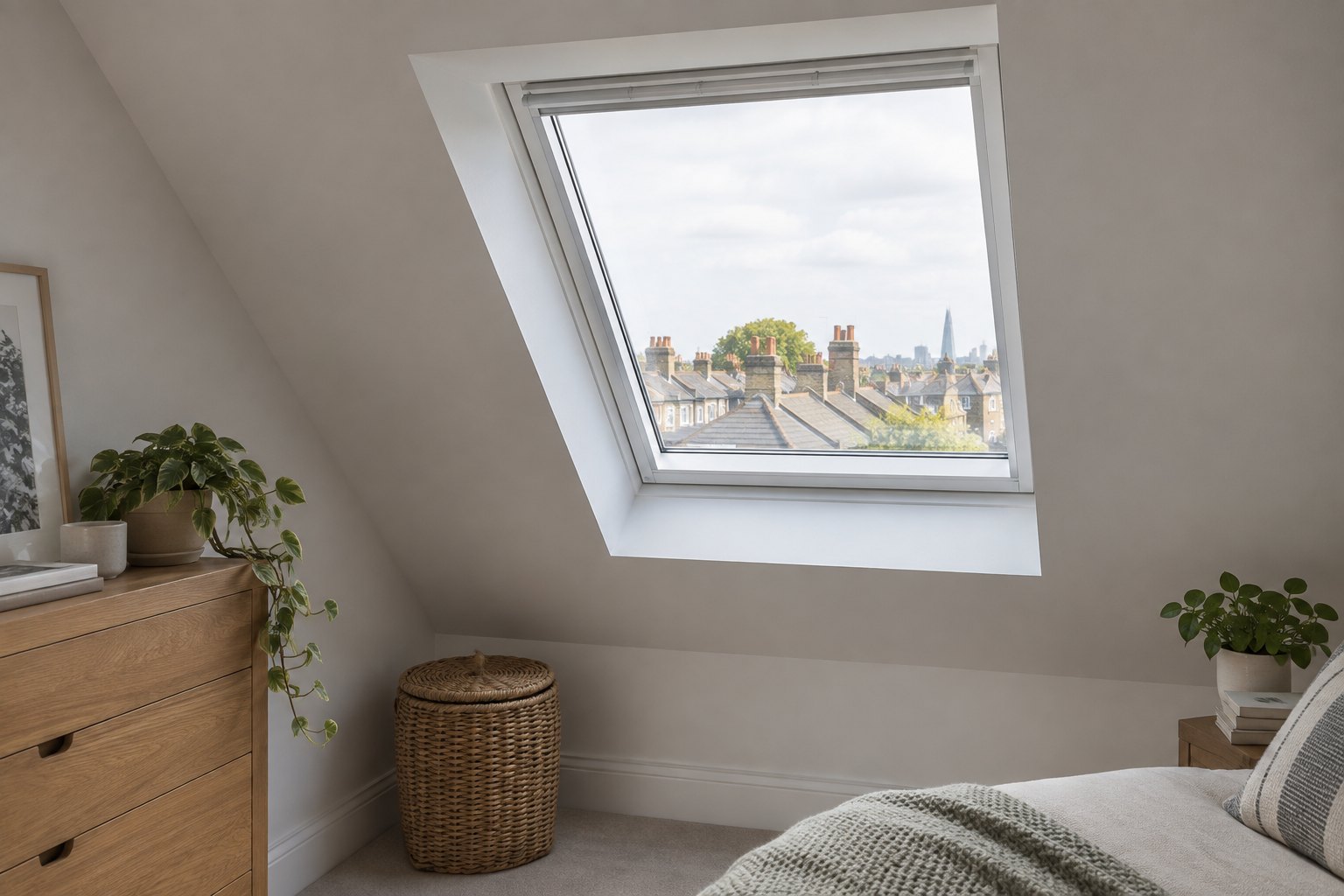
In London, roof windows are one of the most common ways to make better use of loft space without a full dormer conversion. They are also used to replace failed older units, to add light to dark landings in Victorian terraces, and where a conservation-style rooflight may be appropriate, subject to the property and any required consent. Getting the flashing right on a slate roof is what separates a dry installation from one that leaks at the first heavy storm.
Signs a Roof Window Is the Right Choice
- A loft used for storage, a study or a spare bedroom that has no natural light
- A dark top-floor landing or stairwell that needs a light on during the day
- An existing roof window that leaks, has failed glazing or will not open or close
- A loft room that overheats in summer and needs ventilation high up
- A planned loft conversion where the proposed rooflights meet the relevant design and consent requirements
- A flat-roofed rear extension where a rooflight or lantern would brighten the kitchen
Roof Window Types Explained
- Centre-pivot windows. The most common type, rotating around a central hinge so the glass can be cleaned from inside. They suit most lofts where the window is above head height.
- Top-hung windows. Open outwards from the top, giving a clear view and easier access when the window is set lower; top-hung units are also used as escape windows.
- Conservation rooflights. Slim, dark frames with a central glazing bar, designed to sit flush with slate and mimic Victorian cast-iron rooflights. Often expected in conservation areas.
- Flat-roof rooflights and lanterns. Fixed or opening glazed units on an upstand, used on extensions and flat-topped dormers.
- Blinds, glazing and controls. Options include blackout or heat-reflecting blinds, laminated or acoustic glazing for rooms under flight paths and busy roads, and electric or solar-powered opening.
What to Include When Asking for a Quote
Tell installers whether this is a replacement in an existing opening or a brand-new window, and give the size you have in mind, or the width between rafters if you have measured it in the loft. Say what the roof is covered with (natural slate, plain clay tile, interlocking concrete tile) and the rough pitch, because the flashing kit and the minimum pitch for each window model depend on both. Mention whether the loft is boarded, insulated or already plastered.
Explain how the room will be used. A window in a bedroom may need to be large enough to serve as an escape route, a room under a Heathrow approach may benefit from acoustic glazing, and a south-facing slope may need solar-control glass or an external blind to avoid overheating. If the house is in a conservation area, say whether the window is on the front or rear slope, and whether you already know the council's approach.
A clear quote names the window brand, model and size, the flashing kit, the glazing specification, how the rafters will be trimmed, what internal lining and plastering is included, and whether blinds are part of the price. It should say how the opening will be kept watertight overnight and whether the job includes Building Regulations notification.
How Much Does Roof Window Installation Cost?
| Job size | Typical cost |
|---|---|
| Replace an existing roof window in the same opening | £900 – £1,400 |
| New roof window with trimmed rafters, flashing and internal lining | £1,400 – £2,500 |
| Conservation rooflight, large or paired units, or flat-roof rooflight | £2,500 – £3,500+ |
These are indicative ranges, not quotations. Some roof windows can be fitted largely from inside, subject to a safe access assessment; larger units, awkward roofs and front slopes over a busy pavement may need a tower or scaffold. Blinds, electric operation and plastering add to the price.
The Roof Window Installation Process: What to Expect
- Survey. The installer checks the rafter layout, pitch, roof covering and the room below, and confirms the window size and position with you.
- Consents. Any planning permission for a front slope in a conservation area is confirmed, and Building Regulations notification is arranged.
- Opening the roof. Slates or tiles are removed, the rafters trimmed and the opening framed, usually working from inside.
- Fitting. The frame is fixed, insulation collar and vapour barrier fitted, and the flashing kit dressed in with the roof covering relaid around it.
- Finishing inside. The reveals are lined and plastered or boarded, blinds are fitted and the window is adjusted and demonstrated.
Planning Permission and Building Regulations
Roof windows on a house are often permitted development if they do not project more than 150mm above the roof plane and, on a slope facing a side boundary, are obscure-glazed and non-opening below 1.7m from the floor. Front slopes in conservation areas, listed buildings, flats and streets with Article 4 directions are the main exceptions. Check with your borough and see the Planning Portal roof alterations guidance.
Fitting a new roof window is normally controlled work under the Building Regulations, covering structural trimming, thermal performance and, where a room is habitable, fire escape. Replacing a window in an existing opening can often be self-certified by an installer registered with a competent person scheme. The GOV.UK Building Regulations approval page explains the routes.
How to Choose a Roof Window Installer
- Are you an approved installer for the window brand you are quoting?
- How will you trim the rafters, and do you need an engineer's check for larger openings?
- Which flashing kit suits my slate or tile roof, and will it be recessed or standard?
- Is internal lining and plastering included, or will I need a separate plasterer?
- Will the window meet escape requirements if the room is used as a bedroom?
- Who handles Building Regulations notification, and what certificate will I receive?
Frequently Asked Questions
Can a roof window be fitted without scaffolding?
Some windows can be installed largely from inside, but the installer must assess safe access for the particular roof and unit. Roof height, fragility, pitch and the surrounding area can make scaffold or other protection necessary.
How long does it take to fit a roof window?
A replacement in an existing opening can take half a day. A new window with rafter trimming, flashing and internal lining usually takes one to two days, plus drying time for any plaster.
Will a roof window make my loft too hot?
South- and west-facing windows can add heat in summer. Solar-control glazing, external awnings and the ability to open the window for ventilation all help, and installers can advise on the right combination.
Do I need planning permission for a rooflight in a conservation area?
It depends on the property and the restrictions that apply. Check listed status, Article 4 directions and the proposed position and appearance with the council. A conservation-style product does not itself establish that permission is unnecessary.